What Is E-E-A-T in SEO? A Proven Guide for 2026
What is E-E-A-T in SEO. If running a small website and wondering why your high-quality content isn’t climbing Google’s ranks, the missing piece might be strong E-E-A-T signals. In 2026, building E-E-A-T signals for small websites is more crucial than ever, as search engines prioritize sites that demonstrate real value and credibility.
E-E-A-T, which stands for Experience, Expertise, Authoritativeness, and Trustworthiness, is Google’s framework for evaluating whether your site is worthy of top spots. The exciting part? Small websites can actually build E-E-A-T signals faster than massive corporations because you’re nimble and can focus on authentic, personal touches. Let’s dive into a practical guide on how small websites can build E-E-A-T signals in 2026.
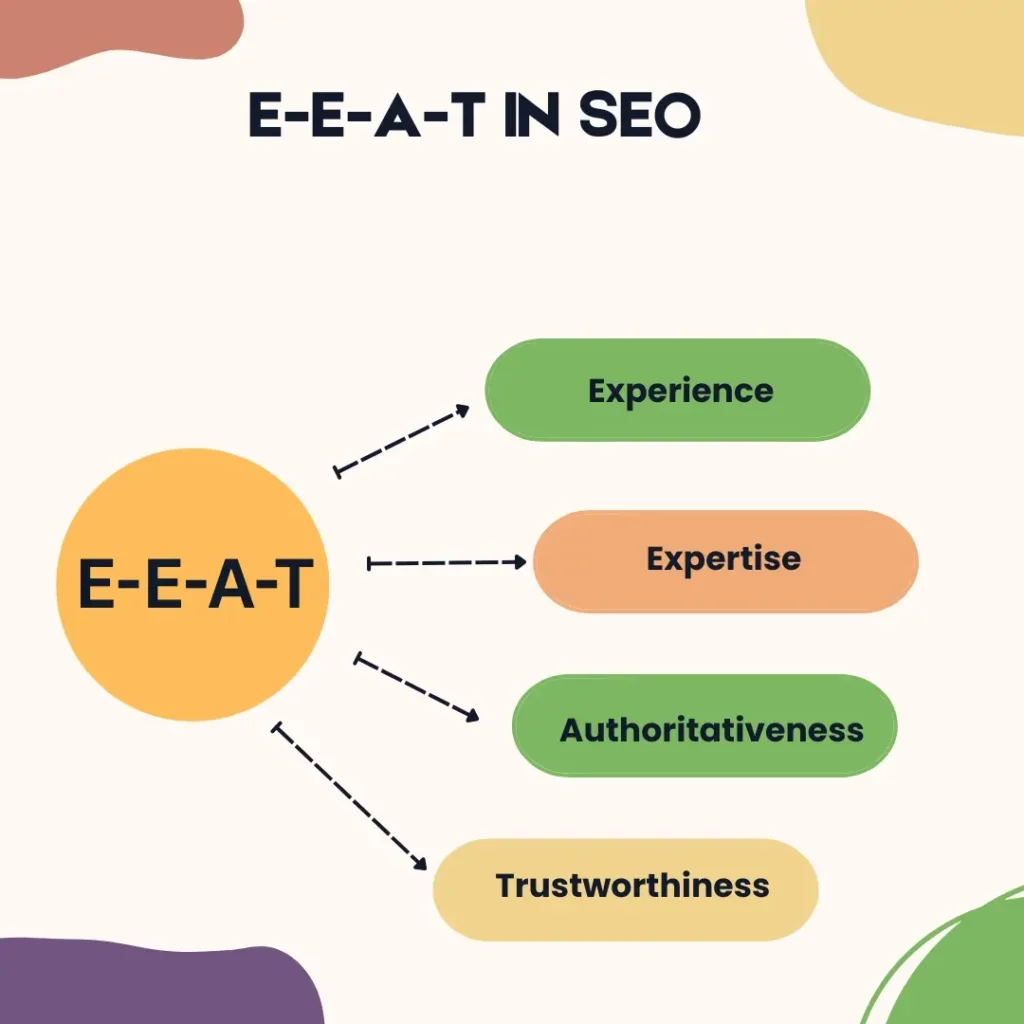
What Is E‑E‑A‑T in SEO? The 4 Pillars (Experience, Expertise, Authoritativeness, and Trust)
What is E-E-A-T in SEO for small websites in 2026, start by breaking down each component:
| Aspect | What E-E-A-T Really Means | Why It Matters in 2026 | How to Strengthen It in Practice |
|---|---|---|---|
| Experience | Real, first-hand knowledge about the topic from actually doing the work. | Google now gives more weight to content created by people who have genuinely lived the experience. | Share your own case studies, client results, years of hands-on work, or personal stories from Kerala-based projects. |
| Expertise | Deep knowledge and skill in your specific field. | Search engines can easily spot shallow or generic content in 2026. | Highlight qualifications, certifications, specialized training, and detailed explanations that only a true expert would know. |
| Authoritativeness | Being recognized as a go-to source by others in your industry. | Authoritative sites get better visibility and are more likely to be recommended by AI tools. | Get featured in reputable publications, earn quality backlinks, win awards, or get mentioned by other respected businesses. |
| Trustworthiness | Being honest, transparent, and reliable in everything you show online. | In an era full of AI-generated content, trust has become the biggest ranking factor. | Use clear contact details, genuine customer reviews, accurate information, secure website (HTTPS), and transparent policies. |
By focusing on these, small websites can build E-E-A-T signals in 2026 that resonate with both algorithms and audiences..
How Small Websites Can Build E‑E‑A‑T in 2026(5 Practical Steps)
Ready to get started? Here are five actionable steps to help small websites build E-E-A-T signals in 2026:
- Craft an Engaging About Page Tell your authentic story, list accomplishments and credentials, add a real photo, explain your site’s mission, and link to social media. This personal touch immediately boosts trustworthiness.
- Enhance Author Profiles Use real names, photos, relevant backgrounds, certifications, and links to portfolios or LinkedIn. Detailed bios signal expertise and make your content more relatable.
- Strengthen Technical Foundations Ensure HTTPS security, provide easy-to-find contact info, include legal pages like privacy policies and terms, and disclose ownership. These basics are essential for trustworthiness.
- Incorporate Proof of Experience in Your Content Embed screenshots of results, data-driven examples, timestamps, custom photos or videos, and named testimonials. This demonstrates real-world application and builds authority.
- Pursue Valuable Backlinks Target guest posts on niche sites, create shareable research or tools, respond to HARO queries, and appear on podcasts. Quality links from credible sources amplify your authoritativeness.
These quick wins can help small websites build E-E-A-T signals in 2026 without overwhelming resources.
E-E-A-T Optimized Content Creation Checklist
To ensure every piece of content supports your efforts to build strong E-E-A-T signals for small websites in 2026, follow this practical checklist.
Many site owners ask: what is E-E-A-T in SEO? It stands for Experience, Expertise, Authoritativeness, and Trustworthiness—Google’s framework (from its Search Quality Rater Guidelines) for evaluating content quality and credibility. Strong E-E-A-T helps small sites compete by signaling reliability, especially as algorithms in 2026 prioritize trust over sheer keyword volume. Here’s how to apply it practically:
- Feature the author’s name with a linked bio. Show who wrote the piece and link to an about page or bio highlighting real credentials, experience, or relevant background—this directly boosts Expertise and Trustworthiness.
- Include publication and update dates for freshness. Display clear “Published on [date]” and “Last updated [date]” to prove the content stays current, supporting overall Trustworthiness.
- Cite 3-5 reputable sources. Back up claims with links to high-authority sites (studies, official docs, respected publications). This builds Authoritativeness and shows you’re not making unsourced assertions.
- Infuse original, experience-based advice. Share personal insights, case studies, or lessons from real projects you’ve handled—this highlights the “Experience” pillar that Google added emphasis on since 2022.
- Use specific, quantifiable examples. Instead of vague tips, say “reduced bounce rate by 42% over 6 months” or “grew organic traffic 3x in under a year”—concrete proof strengthens Expertise and Experience.
- Add alt-text-optimized images. Use descriptive, keyword-relevant alt text (e.g., “E-E-A-T checklist for small website SEO in 2026”) on helpful visuals like infographics or screenshots to improve accessibility and relevance.
- Format for readability with headings and lists. Break content into scannable sections with H2/H3 headings, bullet points, and short paragraphs—better user experience ties into Trustworthiness.
- Link internally to related articles.
Connect to your own in-depth pieces on similar topics to demonstrate site-wide depth and authority.
Stay away from common issues like unnamed authors, duplicated material, generic visuals, hidden contact info, stale info, short-form posts, or unsourced claims—these can seriously damage your E-E-A-T signals and hurt rankings.
By focusing on these steps, small websites can demonstrate what E-E-A-T in SEO really means in practice: building genuine trust that Google (and users) reward in 2026.
Recommended WordPress Tools to Boost E‑E‑A‑T Growth
For small websites aiming to build E-E-A-T signals in 2026, these plugins streamline the process:
- Rank Math SEO: Handles on-page tweaks and schema markup for better visibility.
- Simple Author Box: Creates polished author sections to highlight expertise.
- Schema Pro: Adds structured data to reinforce trust.
- Really Simple SSL: Enables HTTPS with ease.
- WP Rocket: Speeds up your site, improving user trust.
- MonsterInsights: Monitors analytics to refine engagement.
Integrating these tools makes it simpler for small websites to build E-E-A-T signals in 2026.
Expected Timeline for E‑E‑A‑T Improvements in 2026
Building E-E-A-T takes time, but here’s a realistic outlook for small websites in 2026:
- Months 1-2: Enhanced site crawling, higher engagement, and solid trust basics.
- Months 3-4: Gains in long-tail keyword rankings, more backlinks, and 30-50% traffic uplift.
- Month 6+: Stronger competition on key terms, topical dominance, page-one placements, and 200-400% growth in visitors.
Patience pays off as you steadily build E-E-A-T signals for small websites in 2026.
Step‑by‑Step E‑E‑A‑T Implementation Plan for Small Websites in 2026
Week 1: Secure HTTPS, revamp your About page with a personal narrative, update bios on key posts, and add privacy/contact pages.
Weeks 2-4: Integrate custom visuals and data into articles, refresh older content, pitch guest posts, and apply schema.
Months 2-3: Develop a flagship in-depth article, optimize internal links, gather reviews, and secure initial backlinks.
Wrapping Up: E‑E‑A‑T as Your Competitive Edge in 2026
What is E-E-A-T in SEO? It stands for Experience, Expertise, Authoritativeness, and Trustworthiness — Google’s core quality framework that determines how much your content is trusted, cited by AI, and ranked in 2026’s search landscape. Google favors sites that earn their rankings through credibility—prove yours by taking that first step, like updating an author bio to highlight your real experience or sharing a detailed case study with original insights.With consistent effort focused on authentic E-E-A-T signals, your small website will thrive in search results and AI summaries.
Frequently Asked Questions
E-E-A-T is important in 2026?
Yes, even more so. Google doubled down after the February 2026 update—real experience and trust now separate winners from AI junk.
How Soon Will I See Ranking Improvements After Implementing E-E-A-T in 2026?
E-E-A-T improvements are long-term. Expect initial visibility lifts in 1–3 months, noticeable ranking/traffic gains in 3–6 months, and stable results in 6–12+ months. Combine with quick wins like GBP optimization for faster local boosts. Consistent, authentic signals drive sustainable growth in AI-first search
Is E-E-A-T still relevant?
Is E-E-A-T a ranking factor?
Nah, E-E-A-T isn’t a direct ranking factor.
“E-E-A-T isn’t some direct switch Google flips to rank pages, but they totally look for stuff that shows your content has real experience, expertise, authority, and trust—because those things help their systems pick winners It’s their quality checklist for raters, training the algorithm to favor real expertise, experience, authority, and trust. No magic switch—just signals that matter more after recent updates.
What is E-E-A-T in SEO?
EEAT (Experience, Expertise, Authoritativeness, Trustworthiness) is Google’s framework for evaluating content quality. Added “Experience” in 2022 (from original E-A-T), it guides quality raters and influences algorithms—especially for YMYL topics—to prioritize helpful, credible, people-first content for better rankings
Hi, this is a comment.
To get started with moderating, editing, and deleting comments, please visit the Comments screen in the dashboard.
Commenter avatars come from Gravatar.